Know the Fiat rental rules for driving Sicily in style, from license checks and deposits to ZTL zones, parking, insurance, and scenic road planning ahead.
Sicily is not a destination you simply check off. One morning can begin beneath glittering Byzantine mosaics, continue through a Greek theater facing the sea, and end over a plate of pasta in a Baroque piazza. These top Sicily cultural sites reveal an island shaped by Greek, Roman, Arab, Norman, Spanish, and Sicilian influences – each leaving something unforgettable behind.
For travelers who want more than a quick photo stop, the best approach is to pair big-name landmarks with the landscapes, villages, and local flavors around them. Sicily’s distances can surprise first-time visitors, so choose a few regions and give each site the time it deserves.
Top Sicily Cultural Sites for an Unforgettable Trip
1. Palermo’s historic center
Palermo is loud, elegant, slightly chaotic, and impossible to mistake for anywhere else. Its historic center is a living record of the island’s layered past, where Arab-Norman architecture rises near bustling markets, noble palaces, churches, and street-food stalls.
Start with the Norman Palace and the Palatine Chapel, whose gold mosaics glow with astonishing detail. Then make time for Palermo Cathedral, the Quattro Canti crossroads, and the theatrical atmosphere of Piazza Pretoria. For a more local side of the city, wander Ballarò or Capo market, where vendors call out over pyramids of citrus, olives, seafood, and fragrant spices.
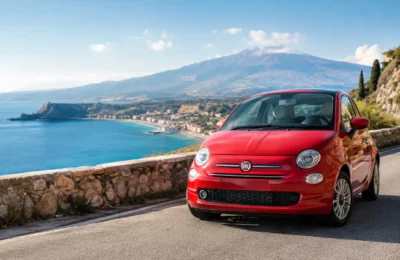
Palermo works especially well with a private guide or a relaxed city experience by vintage Fiat 500. The streets are often narrow and intense, but that is part of the magic when someone local handles the details.
2. Monreale Cathedral
High above Palermo, Monreale Cathedral holds one of Sicily’s great visual surprises. From outside, it is impressive. Inside, it is extraordinary: more than 6,000 square meters of luminous mosaics cover the walls and tell biblical stories in gold, blue, green, and deep red.
Do not rush through the cathedral. Look closely at the Christ Pantocrator in the apse, then step into the cloister, where graceful arches rest on richly decorated columns. The setting also offers wide views over Palermo and the Conca d’Oro valley. Visit in the morning if you prefer a quieter experience and softer light.
3. Segesta Archaeological Park
Segesta feels cinematic from the moment its solitary Doric temple appears among rolling hills. Built in the fifth century BC, the temple remains remarkably intact despite never receiving the roof and inner chamber usually associated with Greek temples.
The real reward is to continue uphill to Segesta’s ancient theater. Carved into the slope, it opens toward a vast sweep of countryside and distant mountains rather than a modern city skyline. This is a site for travelers who want archaeology with space, silence, and a powerful sense of place. It combines beautifully with Erice or a winery visit in western Sicily.
4. Erice
Perched high above Trapani, Erice is a medieval hill town of stone lanes, tiny courtyards, ancient churches, and sudden views of the sea. Clouds often drift through its streets, giving the town a romantic, almost storybook feeling even in summer.
Visit the Venus Castle and the Balio Gardens, then slow down for almond pastries or a classic Sicilian pastry in one of the town’s historic bakeries. Erice can be cooler and windier than the coast, so bring a light layer. That change in atmosphere is exactly why it is such a memorable contrast to sunny beaches and lively Palermo.
5. The Valley of the Temples in Agrigento
Few places show the scale of ancient Sicily like the Valley of the Temples. This archaeological area contains some of the best-preserved Greek temples anywhere in the Mediterranean, standing along a ridge just outside Agrigento.
The Temple of Concordia is the site’s star, with columns and proportions so complete that it feels almost newly built. Yet the experience is more moving when you walk the full route and see how the temples sit within the broad, sun-washed landscape. Late afternoon is ideal, especially when the limestone warms to honey color. Bring water, comfortable shoes, and patience for the heat between June and September.
6. Cefalù’s Norman Cathedral and old town
Cefalù offers one of Sicily’s most satisfying combinations: serious cultural heritage, a beautiful historic center, and a beach at the edge of town. Its Norman Cathedral dominates the main square with twin towers and a celebrated Christ Pantocrator mosaic inside the apse.
After the cathedral, explore the narrow streets toward the old harbor and stop for lunch near the waterfront. Travelers with more energy can climb La Rocca, the huge rocky outcrop above town, for views over tiled rooftops and the Tyrrhenian Sea. Cefalù is an easy choice for couples and small groups who want culture without sacrificing a relaxed coastal day.
7. The ancient theater of Taormina
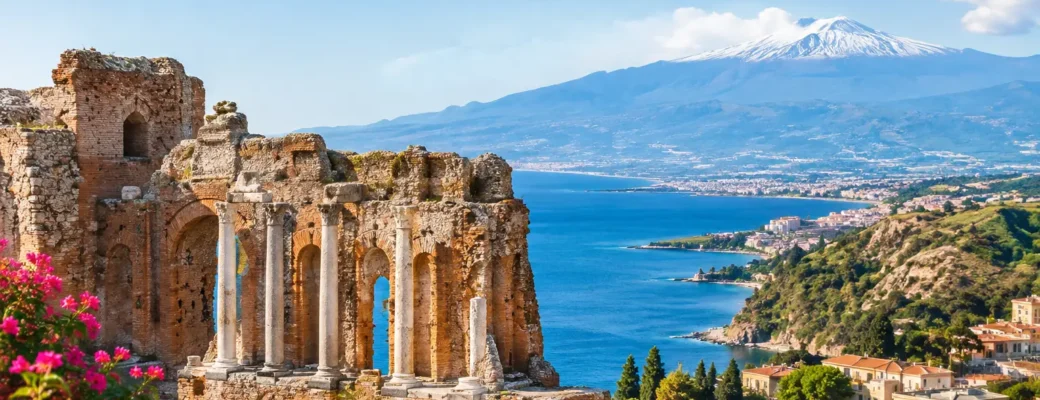
Taormina’s Greek Theater is famous for good reason. The ruins frame Mount Etna, the Ionian Sea, and the coastline in one dramatic view, making it one of the most photographed cultural sites in Sicily. Originally built by the Greeks and later enlarged by the Romans, it still hosts performances during warmer months.
Taormina can be crowded, particularly from late spring through early fall. Go early, reserve plenty of time, and consider staying into the evening if a concert or performance is scheduled. Beyond the theater, the town’s lanes, terraces, and gardens make it easy to turn a visit into a full day.
8. Mount Etna and the wine country around it
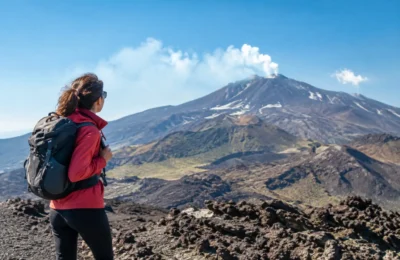
Etna is not a museum piece. Europe’s most active volcano changes Sicily’s landscape, agriculture, and imagination in real time. A guided excursion can take you across black lava fields, extinct craters, and high-altitude terrain that looks more lunar than Mediterranean.
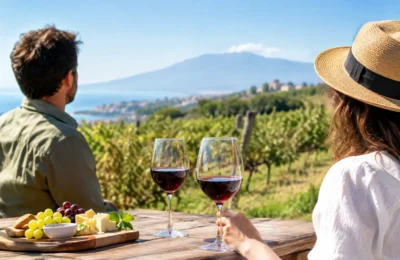
The cultural story continues on Etna’s lower slopes, where mineral-rich volcanic soil produces distinctive wines, pistachios, honey, and orchard fruit. This is a site where context matters: a local guide helps explain eruptions, geology, and the communities that have learned to live beside the volcano. Weather and volcanic activity affect access, so flexibility is essential.
9. Noto and the Baroque towns of the southeast
After the devastating earthquake of 1693, towns across southeastern Sicily were rebuilt in a bold, theatrical Baroque style. Noto is the most polished example, with honey-colored facades, sweeping staircases, ornate balconies, and a main street made for an unhurried evening walk.
The cathedral is the centerpiece, but the pleasure is in the details: carved masks beneath balconies, grand doorways, and the way the stone changes color as the sun drops. If your itinerary allows, pair Noto with Ragusa Ibla or Modica. Each town has its own character, while together they show the extraordinary ambition of Sicilian Baroque architecture.
10. Syracuse and the island of Ortigia
Syracuse was once among the most powerful cities in the Greek world, and its archaeological park still carries that weight. The Greek Theater, Roman amphitheater, and Ear of Dionysius offer a compelling start, especially for travelers fascinated by the ancient Mediterranean.
Then head to Ortigia, Syracuse’s compact old island. Here, the mood changes from monumental to intimate. Walk to Piazza Duomo, where the city’s cathedral incorporates columns from a Greek temple, and continue along the waterfront at sunset. Ortigia is ideal for lingering over dinner, browsing small artisan shops, and seeing how ancient foundations still shape daily Sicilian life.
How to Build a Cultural Sicily Itinerary
Sicily rewards travelers who resist trying to cover the whole island in a few days. Palermo, Monreale, Segesta, and Erice make a strong western route. Cefalù, Etna, Taormina, and Syracuse fit naturally into an eastern journey. Agrigento and the Baroque southeast can be added between the two, but only if you have enough time for the drives.
Private transportation can make the experience far more enjoyable, particularly when visiting countryside sites or combining several stops in one day. Sicily Tour Experience can help turn those connections into a curated day out, whether that means an archaeological route, a volcano adventure, or a cultural excursion finished with local wine and food.
The most memorable days here usually leave room for the unexpected: a roadside view of vineyards beneath Etna, an elderly baker wrapping warm pastries in Erice, or evening light on a temple that has stood for more than two thousand years. Leave space in your plans for those moments. Sicily tends to reward it.
More to Explore