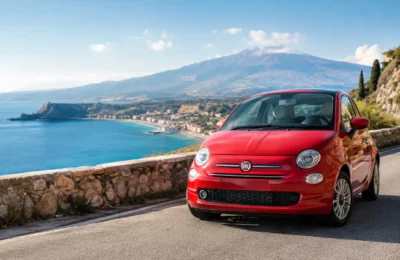
Know the Fiat rental rules for driving Sicily in style, from license checks and deposits to ZTL zones, parking, insurance, and scenic road planning ahead.
Mount Etna is not one single experience viewed from two different parking lots. Etna north versus south is a real choice between two distinct moods: the wild, forested slopes above Linguaglossa and the dramatic, open volcanic world above Rifugio Sapienza. Both lead toward Europe’s highest active volcano, but the journey, scenery, pace, and best-fit traveler can feel completely different.
For couples planning a memorable day in Sicily, families seeking an easy adventure, and travelers who want photographs that look like another planet, choosing the right side can shape the whole excursion. The best answer is not simply north or south. It depends on what you hope to feel when the black lava appears beneath your feet.
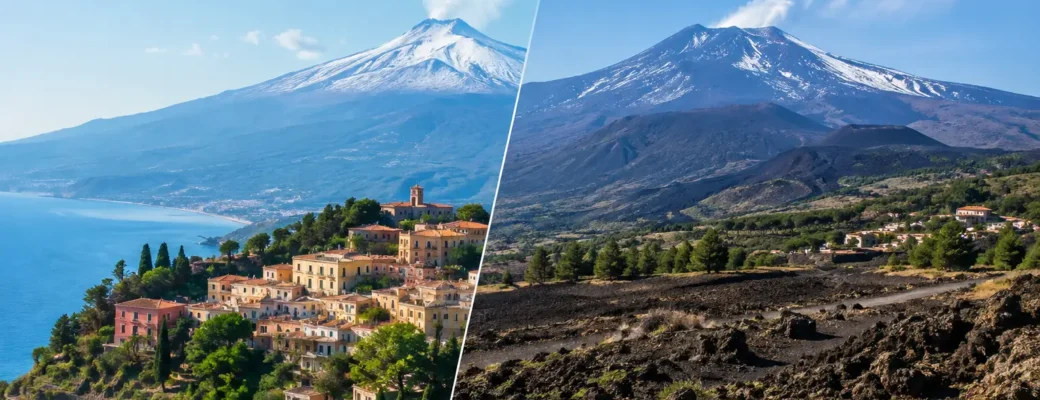
Etna North Versus South at a Glance
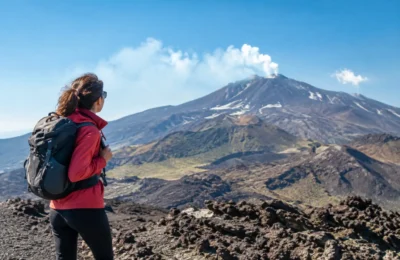
Etna South is the more accessible and energetic side of the volcano. Reached from the Catania area, it is centered on Rifugio Sapienza at roughly 6,300 feet above sea level. This is where many visitors find the classic Mount Etna scene: broad lava fields, extinct craters, cable cars, 4×4 vehicles, and a busy mountain base with services close at hand.
Etna North, generally approached through Linguaglossa and Piano Provenzana, feels quieter and more remote. The roads pass through vineyards, chestnut woods, and villages on the volcano’s northern slope before opening onto a powerful landscape of lava flows and volcanic sand. It is a wonderful choice for travelers who want fewer crowds, a more natural setting, and a day that pairs beautifully with the wine country around Mount Etna.
Neither side is “better” in every situation. South is usually the easier choice for first-time visitors and travelers based in Catania, Syracuse, or Taormina. North often wins over those looking for a less commercial, more intimate encounter with the mountain.
Choose Etna South for Big Views and Easy Access
Etna South has an immediate sense of arrival. From Rifugio Sapienza, dark volcanic ground rolls outward beneath a huge sky, while the lower craters create an accessible first look at Etna’s restless geology. It is a place where you can stand on the rim of an extinct crater without committing to a long wilderness hike.
The cable car is one of the main reasons to choose this side. Depending on volcano conditions and official operating decisions, it can take visitors higher up the mountain, where guided vehicle transfers and walks may continue toward authorized areas. Access to the summit zones is always regulated for safety, and routes can change quickly due to weather or volcanic activity. That uncertainty is part of visiting a living volcano, not a drawback in planning.
This side suits travelers who want options. You can enjoy a shorter visit around the Silvestri Craters, spend more time hiking with a guide, or build a fuller high-altitude volcano excursion around the cable car experience. Facilities are more developed, which can be reassuring for families, guests with limited time, or anyone who prefers a clear, organized day.
Etna South can also be especially practical in cooler months. The higher elevation often brings snow in winter, and the area may take on the appearance of a Sicilian alpine landscape. Operations and road conditions can vary, so flexibility is essential, but the contrast between snow, black lava, and Mediterranean light is extraordinary.
The trade-off on the south side
Popularity brings energy, but it can also mean more visitors, especially in high season. If your dream is a silent walk through untouched-looking volcanic terrain, the busy base area may feel less personal. The landscape is spectacular, though it is more visibly arranged around tourism services than on the north slope.
Choose Etna North for Wilderness, Forests, and Wine Country
Etna North offers a slower reveal. Instead of moving quickly from a busy mountain base into lava terrain, you travel through a changing Sicilian landscape: cultivated vineyards, old stone walls, oak and pine woods, and then the sudden black expanse of past eruptions. The contrast makes the volcanic setting feel even more dramatic.
Piano Provenzana is the main departure point on this side. The area has been profoundly shaped by eruptions, including the 2002 activity that transformed parts of the landscape. You can still see how lava has marked the terrain, creating ridges, fields, and dark channels that look raw and remarkably close to nature.
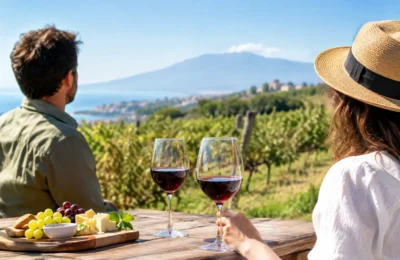
For many travelers, Etna North feels more atmospheric. It is ideal for scenic walks, off-road exploration where permitted, and guided excursions that explain how the forests, farms, and lava flows coexist on the volcano. The north slope is also closely connected to Etna’s celebrated wineries. A volcano-and-wine day can combine the thrill of craters and lava caves with a relaxed tasting of local wines shaped by volcanic soil.
This is a particularly appealing option for couples, photographers, and food-and-wine travelers. After the stark drama of the mountain, the vineyards around Randazzo, Castiglione di Sicilia, and Linguaglossa offer a warm, distinctly Sicilian finish to the day.
The trade-off on the north side
Etna North generally has fewer facilities and less of the instant, high-volume activity found on the south side. It may require more careful planning, particularly if you are staying on Sicily’s southeastern coast. The road journey can be longer, and the experience is often best with local transportation or a guided excursion rather than trying to coordinate every detail independently.
What the Landscape Feels Like on Each Side
On Etna South, the landscape is wide, exposed, and lunar. The lower craters are easy to recognize, and the sweeping views can stretch toward Catania and the Ionian coast on clear days. It feels grand, open, and cinematic – a classic volcano day with the scale turned up.
On Etna North, the volcano feels more layered. Green forest and dark lava stand side by side, and the north slope can feel wilder even before you reach the highest accessible points. The scenery has a quieter beauty, with fewer built elements and a stronger sense of moving through a living ecosystem.
Weather changes quickly on both sides. A sunny morning in Taormina or Catania does not guarantee clear conditions on Etna. Temperatures drop with elevation, wind can be sharp, and clouds may hide the views without warning. Closed-toe shoes, layers, sunglasses, water, and a light jacket are smart choices in every season. In colder months, warmer clothing is not optional.
Where You Are Staying Matters
Your itinerary should play a role in the decision. Etna South is usually more convenient from Catania, Syracuse, Noto, and the southern Ionian coast. It also works well for visitors who want to combine the volcano with city time in Catania or a coastal stay nearby.
Etna North is a natural match for Taormina, Giardini Naxos, and the Etna wine region. If you are already staying on the northeast side of the island, the journey can feel more relaxed and less like a transfer day. Travelers coming from Palermo can visit either side, but a private, well-planned day is especially valuable because Mount Etna is a major cross-island experience.
A Sicily Tour Experience excursion can make this easier by turning travel time into part of the day rather than a logistical puzzle. With local guidance, you can focus on the changing scenery, volcanic stories, and the pleasure of being on the road in Sicily.
So, Which Side of Etna Should You Visit?
Choose Etna South if this is your first visit, you want the cable car option, you are traveling with children, or you prefer a straightforward route with more services and accessible craters. It delivers the iconic Mount Etna experience with powerful views and plenty of ways to tailor the level of adventure.
Choose Etna North if you are drawn to forests, lava fields, quieter roads, and the possibility of combining your volcano day with wineries and small mountain towns. It is less about checking off an attraction and more about feeling the many faces of the mountain.
If time allows, return for both. Etna is never quite the same twice: clouds shift, light changes, volcanic activity reshapes access, and every slope tells a different part of Sicily’s story. Pick the side that matches your travel style, dress for the altitude, and leave room in the day for the unexpected beauty that makes this volcano unforgettable.
More to Explore