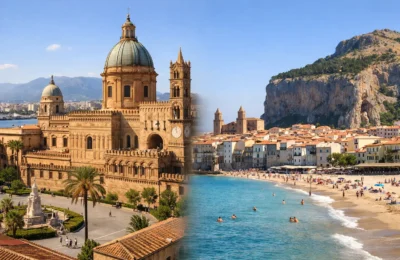
Planning a Palermo or Cefalu daytrip? Compare city energy, beaches, landmarks, travel time, and local flavors for a day in Sicily you will truly remember.
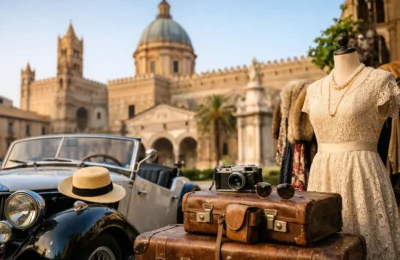
A vintage Fiat 500 glowing in the Palermo sun, a coastal road opening toward Cefalù, the scent of citrus drifting through an open window – driving can be one of Sicily’s most unforgettable pleasures. Sicily driving safety is what lets that pleasure stay exactly that: a beautiful part of your trip, rather than a stressful story you tell afterward.
The island rewards travelers who leave room for detours. A spontaneous stop for granita, a viewpoint above the sea, a small winery tucked among vines – these are often the moments you remember most. But Sicily has energetic cities, narrow historic lanes, changing road conditions, and driving customs that may feel very different from home. A little preparation gives you the freedom to enjoy it all with confidence.
Sicily Driving Safety Starts Before You Leave
Choose a vehicle that suits the trip you actually want to take. A compact car is often the happiest choice for couples and small groups planning time in Palermo, Cefalù, Siracusa, Taormina, or hill towns where streets can be remarkably narrow. It is easier to park, easier to turn around, and far less intimidating when a delivery van appears around a blind corner.
A larger car may make sense for families, luggage-heavy itineraries, or longer stays, but size comes with trade-offs. Some village streets were built long before modern traffic, and parking spaces can be tight. If you are renting a vintage Fiat 500, embrace it as part of the experience – and pack thoughtfully. Its charm is enormous; its trunk is not.
Before setting off, make sure you have your valid driver’s license, rental paperwork, passport, and the driving documents required for your nationality. Visitors from outside the European Union should generally carry an International Driving Permit along with their home license. Rental policies can vary, so check the requirements before arrival rather than at the rental desk.
Take a few minutes to inspect the car with the rental representative. Know how to operate the lights, hazard lights, windshield wipers, fuel cap, and reverse gear. Ask what fuel it uses and confirm the emergency assistance procedure. This small pause feels wonderfully unglamorous, but it can save a great deal of time on a scenic road later.
Palermo, ZTL Zones, and Historic Centers
The biggest driving surprise for many visitors is the ZTL, short for Zona a Traffico Limitato. These restricted-traffic areas are common in historic Italian centers, including Palermo. They are designed to reduce traffic and protect places where daily life unfolds around ancient streets, markets, churches, and pedestrian spaces.
Do not assume that following another car through an entrance is safe. ZTL access is often monitored by cameras, and a rental car does not make you exempt. Restrictions can apply at certain hours, on specific days, or more broadly, depending on the city and zone. Signs may be easy to miss when you are concentrating on scooters, pedestrians, and traffic lights, so plan your route before you enter the city.
If your hotel is inside a restricted area, contact them before you arrive. Some accommodations can arrange authorized access or tell you the best nearby garage. When in doubt, park outside the historic center and walk, take a taxi, or enjoy a guided city experience. Palermo is far more enjoyable when you are looking up at its Arab-Norman details and lively street scenes instead of searching for a legal turn.
City driving also asks for patience. Scooters may filter through traffic, pedestrians can step into the road with little warning, and double-parked cars are part of the landscape. Keep your speed low, leave extra space, and let the local rhythm settle around you. There is no prize for driving like a local on your first afternoon.
Read the Road, Not Just Your GPS
GPS is useful in Sicily, especially for long routes and rural addresses, but it is not the final authority. It may suggest a shortcut through a village lane too tight for comfort, send you toward a seasonal road, or fail to reflect a temporary closure. Watch road signs closely and use common sense if the route suddenly becomes steep, narrow, or clearly unsuitable for your vehicle.
Sicily’s main highways and toll roads can make travel between major destinations straightforward, while smaller roads often deliver the island’s best views. On any road, respect posted speed limits. As a general guide, urban limits are commonly 50 km/h, while highway and rural-road limits vary by road type and conditions. Rain, construction, curves, and local restrictions can lower those limits.
Drive on the right and overtake on the left. At roundabouts, slow down early, check the signs for your exit, and yield as required to traffic already circulating. Italian drivers can be decisive, especially in busy areas, but decisive does not have to mean rushed. Signal clearly, avoid sudden moves, and give yourself a moment to understand the flow.
Keep your phone out of your hand while driving. Set your navigation before you move, or let a passenger handle directions. Sicily is too visually rich to experience through a screen, and a missed exit is usually just an invitation to take a different road.
Mountain Roads and Coastal Curves Need Time
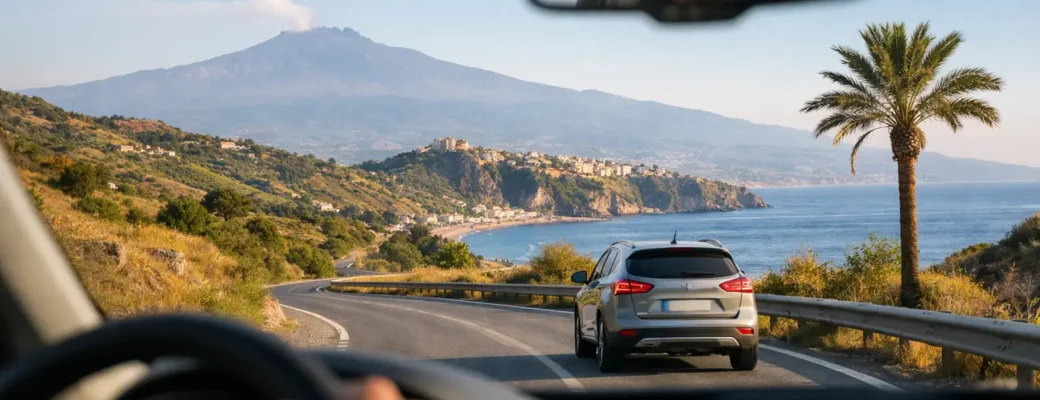
A drive toward Mount Etna, Erice, Ragusa, or the inland countryside can be spectacular, but these routes deserve a slower pace. Curves may be tighter than they appear on a map, and elevation changes can bring fog, wind, rain, or cooler temperatures even when the coast is warm and bright.
Use a lower gear on long descents rather than relying only on the brakes. Stay on your side of the road, particularly on blind bends, and do not stop in a curve for a photograph, however tempting the view may be. Pull into a marked lay-by or a safe parking area instead. The best panorama is never worth creating a hazard.
In rural areas, expect tractors, cyclists, animals, and slow-moving local traffic. At night, roads can feel much darker than travelers expect, with limited street lighting outside towns. If you are unfamiliar with the route, daytime driving is the more relaxed and rewarding option.
Parking Without the Guesswork
Parking colors matter in Sicily. Blue-lined spaces usually require payment, while white-lined spaces may be free but can have local time limits or resident rules. Yellow markings are generally reserved and should be avoided unless you are clearly authorized to use them. Always read the nearby signs, because rules can change from one block to the next.
In paid areas, use the parking meter or the payment method shown on the sign. Display any required ticket as instructed. Avoid parking where other cars happen to be squeezed in if there are no clear markings. What looks like a clever local solution may block a driveway, bus route, or emergency access.
For popular destinations such as Taormina, Cefalù, and hilltop towns, choose a public garage or designated lot when possible. It may mean a short walk uphill, but it removes the pressure of finding street parking in a place designed for centuries of feet, not rows of cars.
Make Driving Part of the Day, Not a Race Between Stops
The safest Sicily itinerary has breathing room. A route that appears to take two hours can become three with traffic, roadworks, a coffee stop, or the simple desire to linger somewhere beautiful. Build in time for fuel, parking, and a proper lunch rather than treating every transfer as a timed mission.
Fuel stations are common on main routes but less predictable in remote areas, and some may be unattended at certain times. Do not wait until the tank is nearly empty before refueling. If you use a self-service pump, double-check the fuel type before you begin. A few extra minutes of attention is much better than the alternative.
Alcohol and driving do not belong together. Sicily’s wine country, aperitivo culture, and long dinners are part of the island’s magic, so decide in advance who is driving or arrange another way to travel. That choice protects everyone and lets the evening remain as joyful as it should be.
Know When to Let Someone Else Take the Wheel
A rental car offers wonderful independence, but it is not the best answer for every day. If you want to fully enjoy a winery tasting, avoid ZTL concerns in Palermo, or spend the day focused on Etna’s landscapes rather than mountain curves, a local driver or curated excursion can be the more relaxing choice.
This is especially true for travelers arriving after a long international flight. Start with a walking tour, city experience, or private transfer, then pick up your car when you are rested and ready. The island is not going anywhere, and you will see more when you are not exhausted.
For any road emergency, use 112 to reach emergency services in Italy. Keep the rental company’s assistance number saved on your phone, and move to a safe place if you can do so without risk.
Give each drive the same attention you would give a favorite meal or sunset: take your time, notice where you are, and leave room for the unexpected. With calm planning and a little local awareness, the road becomes part of the Sicily you came to fall in love with.
More to Explore